FMCSA let driverless trucks swap warning triangles for cab beacons for five years
The Federal Motor Carrier Safety Administration granted Aurora Operations, and any other carrier running Level 4 trucks that notifies it first, a five-year exemption from the stopped-vehicle warning rules it had denied in 2024.
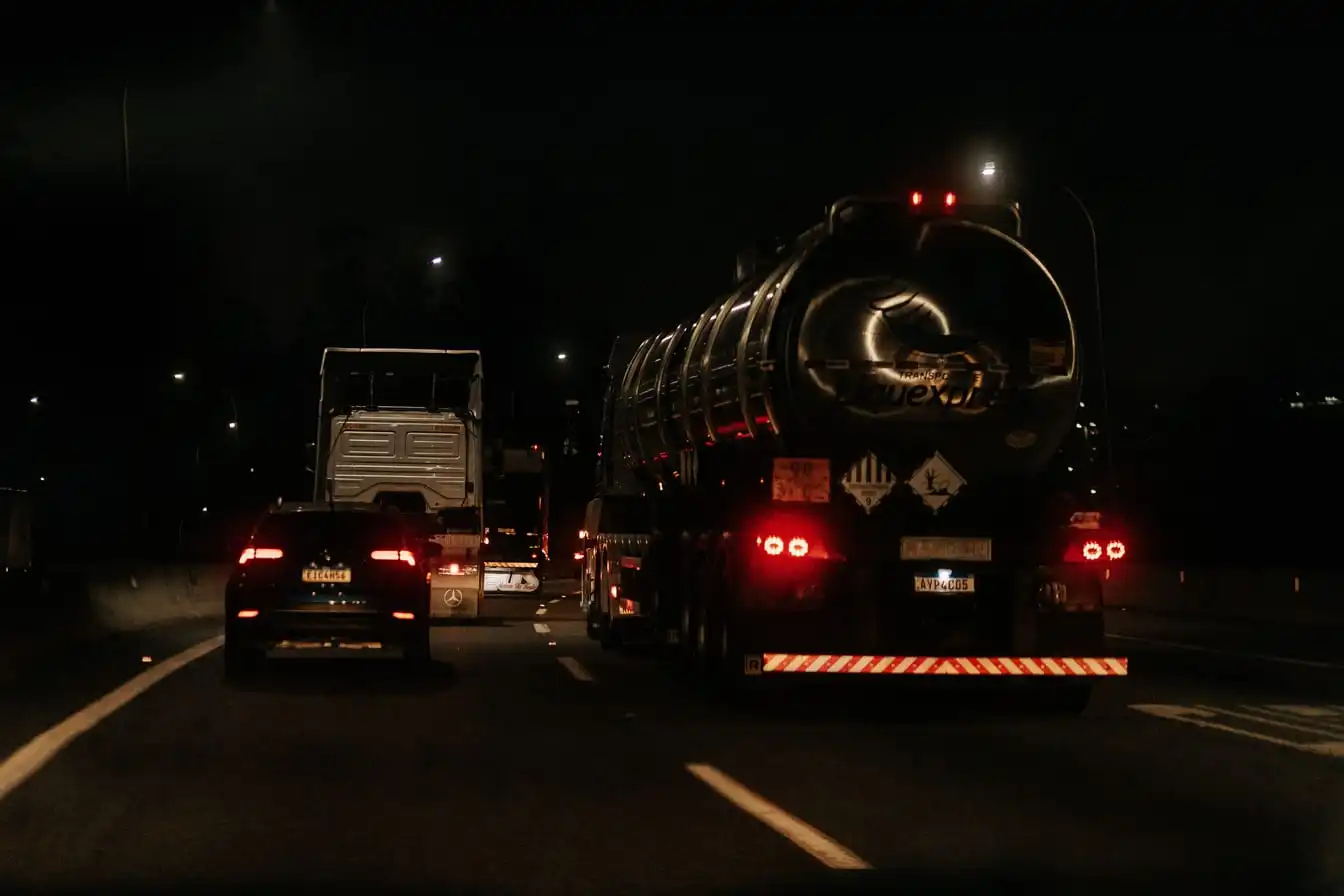
The Federal Motor Carrier Safety Administration granted Aurora Operations and any other carrier running Level 4 automated trucks a five-year exemption from the federal rules on stopped-vehicle warning devices, reversing a denial it had issued in December 2024.
The notice, filed under Docket No. FMCSA-2026-0958, entered the public record on October 8 and was published on October 9 at 91 FR 64736. The exemption took effect on October 7, 2026 and expires on October 7, 2031. It covers three parts of the regulations: the requirement to place warning devices behind and in front of a stopped commercial vehicle within ten minutes, the rule that exterior lamps burn steadily, and the requirement to carry three bidirectional reflective triangles or at least six fusees.
In place of triangles, a truck may use amber flashing beacons mounted at least 100 inches from the ground, meeting the Class 1 photometric requirements of SAE J595, flashing at a rate different from the hazard flashers and drawing on redundant power sources. The beacons have to activate within five minutes of a stop, against the ten minutes the rule allows for triangles.
Unlike the 2024 denial, the grant reaches past the applicant. Any carrier operating a truck with a Level 4 automated driving system, as defined in Table 1 of SAE J3016 (April 2021), may use it after notifying the agency in writing and certifying under penalty of perjury that it can comply. Operations are confined to roads inside the system’s validated operational design domain, crashes have to be reported within five calendar days, and each carrier files an annual report by November 1.
The agency received 402 comments. It said the notification duty, the reporting requirements and the equipment specifications “cure the deficiencies identified in its prior denial.”
Source: FMCSA notice of final disposition, Docket No. FMCSA-2026-0958, 91 FR 64736